What You Need to Know Before Going Off Grid
A reliable off-grid solar power system isn’t as simple as installing solar panels and adding a battery. To live comfortably and reliably without a connection to the electricity grid, several significant technical and lifestyle considerations must be taken into account. Whether you're powering a rural home, business, eco-tourism lodge, or farm, the right off-grid system starts with a clear understanding of your energy requirements and local environment.
In this guide, we explain the key components of an off-grid system, how they work together, and the critical factors that influence performance, cost, and reliability.
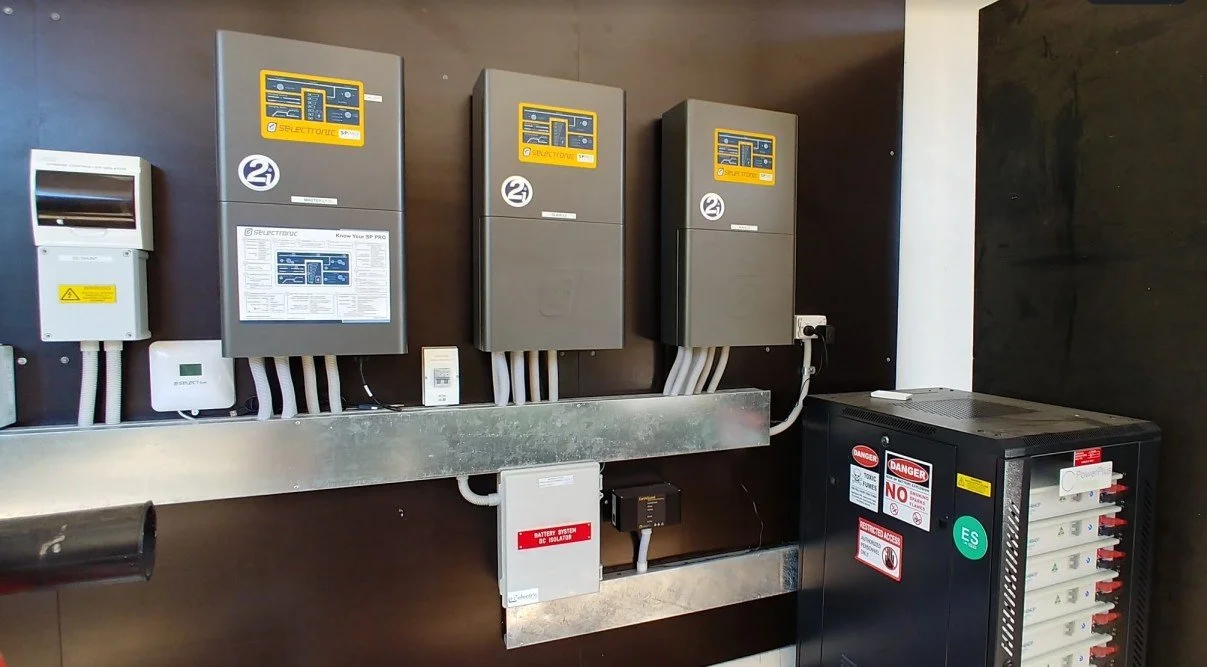
Powerful 3-Phase Off-grid system designed and installed by Transfer Solar in Coldstream, Victoria.
Understanding Your Energy Needs
Before any solar system can be designed or sized correctly, the first and most important step is understanding how much energy you use on average per day. To do this, we need to understand your household load profile - your energy use patterns. This involves listing your main electrical appliances and devices, as well as how often you plan to use them. Heating and cooling systems, water pumps, refrigeration, cooking appliances, entertainment systems, and lighting all need to be accounted for. But don’t worry; we have prepared some tools to help.
In simple terms, we need to calculate your loads by listing each appliance or device you plan to use, noting how many hours per day it's used, and multiplying that by its power rating. This gives us your daily energy consumption, measured in kilowatt-hours (kWh). Our Off-grid load calculator can help you quickly and easily estimate your household energy consumption in 3 easy steps.
In off-grid systems, it's especially important to focus on winter loads, when solar generation is at its lowest but heating needs are at their highest. A well-designed off-grid system must be sized to meet your peak winter loads, not just your average daily usage. We recommend focusing on your winter energy demand, as this will help us accurately size the required solar array and battery bank.
Designed for Your Lifestyle
Off-grid system design is not a one-size-fits-all approach. A well-insulated home with gas cooking and heating will have significantly different energy needs compared to a home with electric hot water, underfloor heating, and pool pumps. Your daily routine, seasonal patterns, appliance selection, and even your long-term plans (like adding EV charging or air conditioning) should all be considered early in the design process.
At Transfer Solar, we also offer load monitoring tools and energy audits to ensure that every system is sized and designed for the way you live now and in the future, not just based on a set of generic assumptions.
Key Components of an Off-Grid System
An off-grid system typically consists of:
Solar Panels (PV Array): These generate electricity from sunlight and should be sized for year-round operation, particularly in winter conditions.
Battery Storage: Stores excess solar energy for use at night and during cloudy days.
Inverter/Charger: Converts DC electricity from solar and batteries into 240V AC power and manages charging from all sources, including solar and generator.
Backup Generator: Provides a reliable secondary power source when solar generation is insufficient.
System Controller & Monitoring: Manages charging, battery health, and overall system performance.
Each of these components must be selected and configured to work together efficiently, and to suit your site’s specific loads, climate, and autonomy requirements.
Battery Storage Considerations
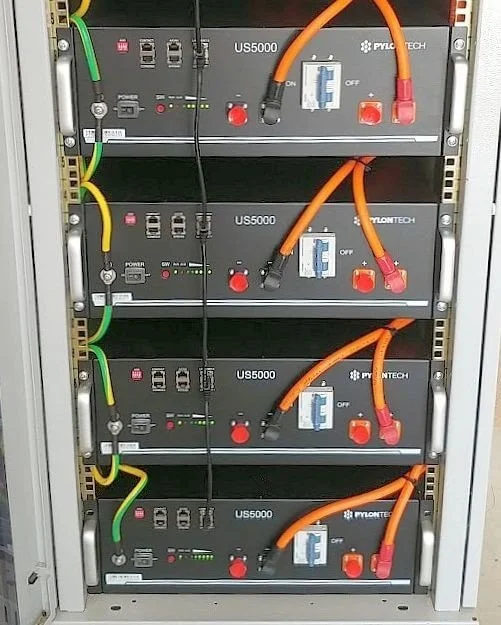
Battery system installed by Transfer Solar near Yea, Victoria
Modern off-grid systems almost always use lithium battery technology, specifically Lithium Ferro Phosphate (LFP), due to its safety, efficiency, and long lifespan. Unlike traditional lead-acid batteries (Gel, AGM, or flooded), LFP systems are compact, maintenance-free, and can be discharged much deeper without reducing life expectancy.
Battery capacity is typically measured in kilowatt-hours (kWh), which tells you how much energy the system can store. But not all of that energy is usable. Lead-acid batteries should be discharged to 40–50% of their capacity to maintain optimal performance, whereas LFP batteries can safely utilise up to 80% of their stored energy on a daily basis.
How Long Do Off-Grid Batteries Last?
Most quality lithium battery systems come with a 10-year warranty and are designed to last between 8 and 15 years, depending on usage, temperature, and depth of discharge. Over time, batteries gradually lose capacity, a phenomenon known as degradation. However, modern LFP batteries typically retain 60–80% of their capacity after 10 years of regular cycling. Battery technology is continually improving, with some of the latest premium LFP battery systems expected to last 15 or even 20 years with only 70% degradation.
Correct system sizing, quality components and monitoring are essential to maximising battery life. Systems designed and installed to meet your peak demand loads, installed in a controlled environment, and managed through an integrated Battery Management System (BMS) will last longer and perform more reliably.
Solar Array Sizing
It’s a common mistake to size a solar system based only on average daily use. In off-grid situations, we must account for seasonal variation, especially the reduced solar generation in winter due to shorter days, cloud cover, and shading from trees or even snow.
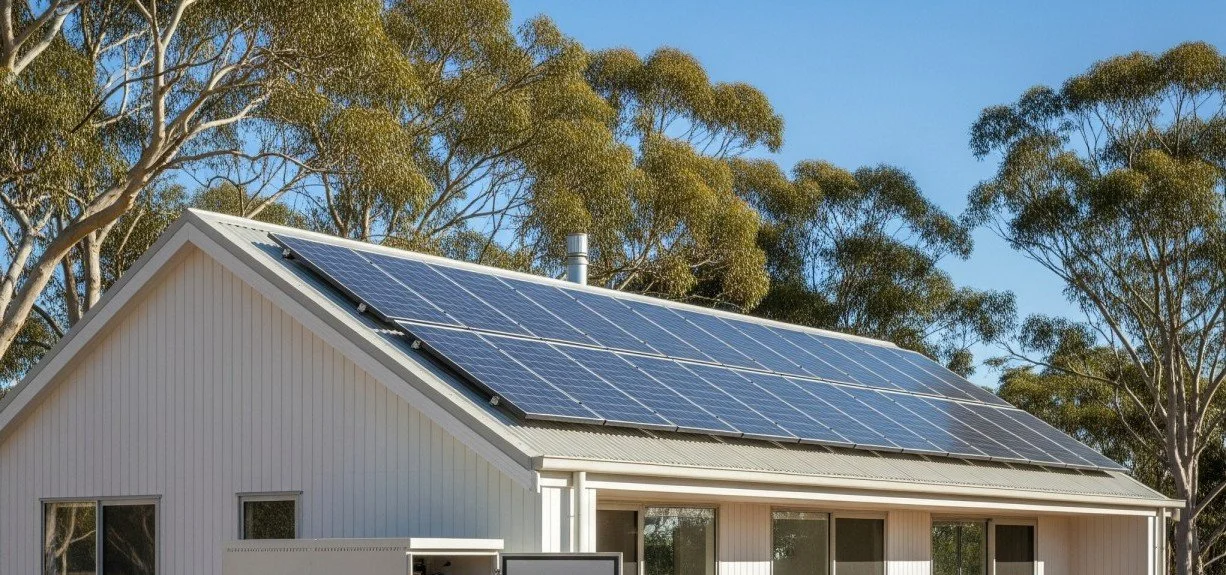
To ensure the battery bank can be fully recharged even on shorter winter days, most solar systems are oversized, often with generation capacity 1.5 to 2 times the daily energy use. In cooler, forested or alpine climates, a much larger array may be needed to compensate for shading.
The orientation and tilt of panels are very important. A steeper tilt angle can significantly boost generation in winter when the solar irradiance is at its lowest. The orientation is also critical, with North being the optimal direction for winter and year-round performance.
Inverters, Control Systems, and Monitoring
The heart of any off-grid power system is the inverter/charger — a device that converts solar and battery power into 240V AC to run your appliances, while also managing battery charging and a backup generator. In larger systems, multiple inverters may be used to deliver three-phase power or handle large peak loads.
Modern inverters also provide advanced monitoring and control features. These allow you to:
View battery state of charge in real-time
Monitor solar generation and load levels
Track generator run time
Receive system alerts remotely
Having reliable, user-friendly monitoring tools is crucial for managing your power usage and identifying issues before they impact your power supply.
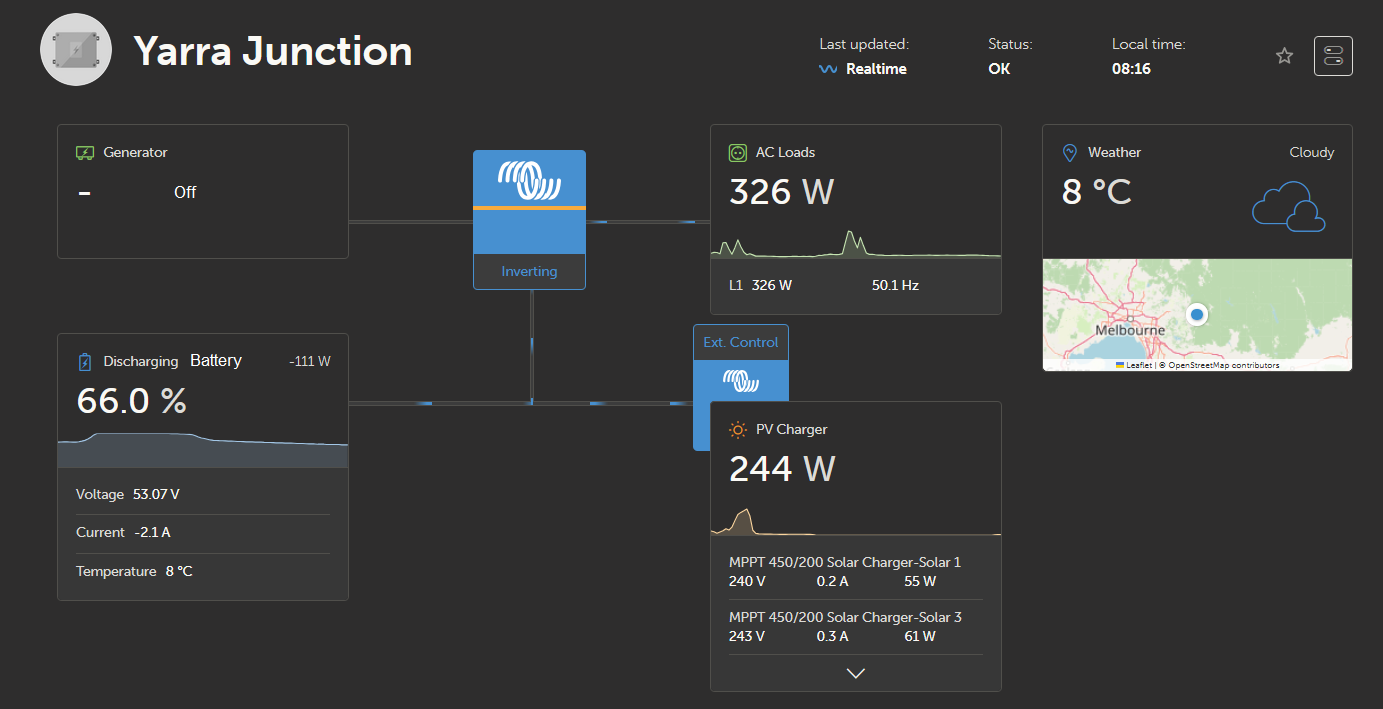
The Victron VRM system monitoring portal - PC or App-based monitoring and control
Do I Really Need a Backup Generator?
In many Australian locations, an off-grid solar system can supply the vast majority of your annual energy needs. However, in temperate or alpine areas such as Victoria, which can have long periods of cloud or fog, a backup generator is essential for ensuring reliability and protecting your batteries.

Auto-start diesel generator
Most off-grid homes use an auto-start diesel generator, connected to the system and triggered to start automatically when the batteries reach a low state of charge. These units are reliable, easy to use, and provide peace of mind, particularly in winter or emergency situations.
In rare cases, homes with oversized solar arrays and highly efficient buildings and appliances may be able to operate without a generator for most of the year. However, we always recommend having a generator installed, especially for critical essential loads.
Off-grid Vs Hybrid systems
Off-grid or stand-alone power systems utilise a combination of solar energy and battery storage to create an independent power source for homes, farms, or businesses. These systems are now highly advanced and can incorporate multiple inverters to create AC-coupled systems, which effectively function as microgrids. Together with remote monitoring and backup generators (for continuous power supply during adverse weather conditions), these systems can provide a highly reliable and secure power supply for almost any situation.
Hybrid systems work similarly to an off-grid system, but they can also interact with the electricity grid to optimise energy use, depending on the time of day or the amount of energy being consumed. Most hybrid systems can also operate in off-grid mode during a blackout, providing seamless backup power. These systems are significantly more economical than off-grid systems, as they only require a small battery system with sufficient capacity to cover the peak evening energy use. In contrast, an off-grid battery system should be sized to last three or more days.
Your Off-grid Solution
Living off-grid can be extremely rewarding, offering energy independence, resilience, and a low-carbon lifestyle. However, it also requires careful planning, high-quality components, and a thorough understanding of how your system operates.
An off-grid power system is a long-term investment. When done right, it should deliver reliable power for 15 years or more, with minimal maintenance and maximum peace of mind.
If you're considering going off-grid or upgrading an existing system, don't hesitate to get in touch. At Transfer Solar, we’ve been designing and building off-grid solar and battery systems since 2011, and we understand what works in the real world.
👉 Contact Transfer Solar to discuss your off-grid goals
👉 Try the Off-grid solar & battery size calculator to get started