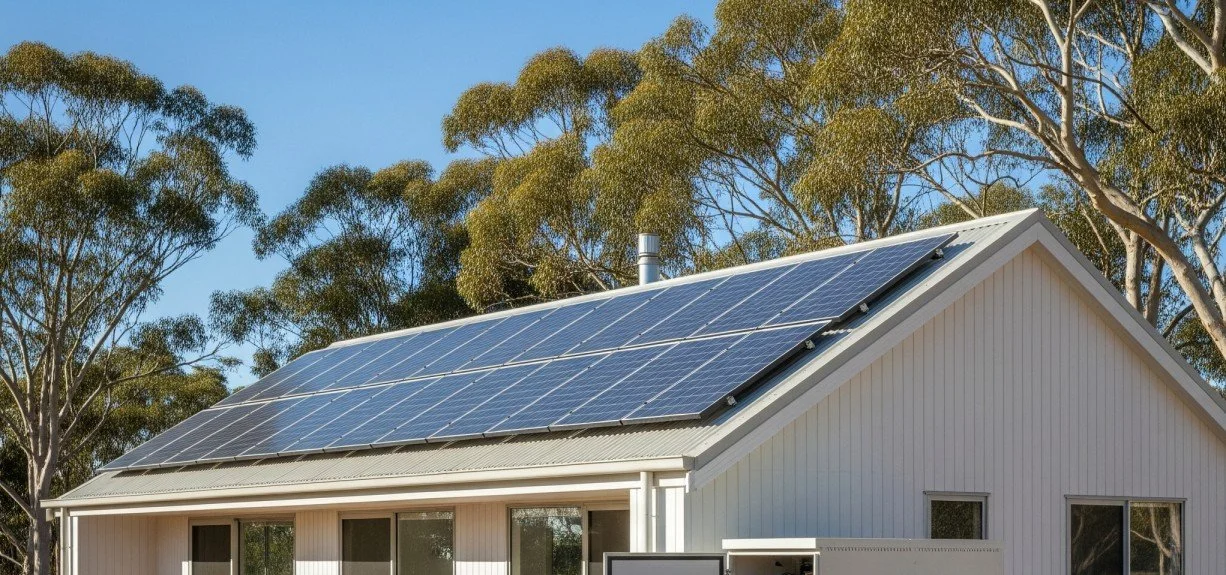
Off-Grid Solar Size Calculator
This simple off-grid calculator will help you estimate your household's or property's average daily electricity usage to determine the required solar and battery sizes. By selecting the common appliances, adjusting their usage time and power rating, you’ll gain valuable insight into the size of the solar system, battery capacity, and backup generator you may require based on the average solar irradiation in a typical Victorian winter, in Australia.
How to use the Calculator - 3 Easy Steps -
Review the prefilled table below and untick any appliances you don’t have.
Adjust the Qty and Power (W) rating if needed. (Standard power ratings used)
Add any missing appliances using the “Add Appliance” button, and you're done!
Off-grid Solar and Battery Size Calculator
| Use? | Appliance | Qty | Power (W) | Use (hrs/day) | Energy (kWh) | Note |
|---|---|---|---|---|---|---|
| Lights | 0.4 | |||||
| Fridge | 1.44 | |||||
| Freezer | 1.2 | |||||
| Dishwasher | 0.75 | |||||
| Electric Cooktop | 2.0 | |||||
| Electric Oven | 3.3 | |||||
| Water Pump | 0.4 | |||||
| Sewage Pump | 0.3 | |||||
| Split-system AC | 4.8 | |||||
| TV | 0.3 | |||||
| Laptop | 0.48 | |||||
| Modem | 0.36 | |||||
| Workshop Tools | 0.3 | |||||
| Total Daily Energy Use (kWh): | 0.00 | |||||
Suggested Battery Size: 0 kWh (Min)
Suggested Solar Array Size (*): 0 kW (Min)
# Estimated Maximum Demand ⚡ : 0 W
Estimated Demand Current: – Amps (NOT peak system current)
Battery Size Explained:
The Days of Autonomy refers to the number of days the battery can supply loads without any solar or generator input. The recommended minimum is 2 days with an oversized solar system. However, 2.5 to 3 days of autonomy is ideal in Victoria (a temperate climate), especially if solar power is limited or partially shaded in winter.
Solar Size Explained:
The Solar Size generated by this tool is an estimate only and is intended for general guidance, based on the average Victorian winter day in Australia. Due to the short days and low solar irradiance in winter (average 2.5 Peak Sun Hours - PSH), this is the most important factor when sizing a solar array. The actual solar size required will depend on the orientation and tilt angle of the panels or roof, as well as any shading issues that may be present.
Next Step: Select which size system suits your requirements


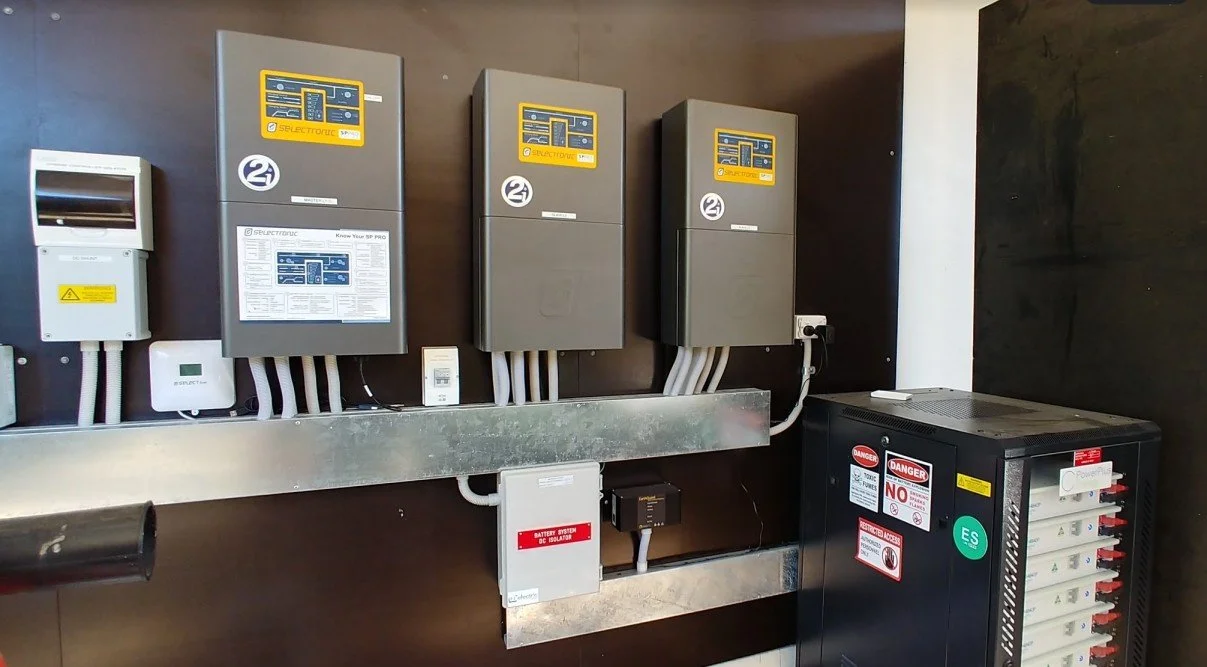
👉 Contact Transfer Solar to discuss your ideal off-grid or battery system.
Important Notes - Disclaimer (*)
Your actual energy consumption (in kWh) may vary significantly depending on factors such as appliance efficiency, usage habits, building efficiency, seasonal weather, and other variables.
# Estimated Maximum Demand is used to help select a suitable inverter. However, peak (surge) loads and power factors also need to be considered, along with temperature derating.
All system design recommendations should be reviewed and confirmed by a qualified off-grid system designer or installer before making any purchasing decisions or commencing construction.